With the introduction of some impressive new products, networking giant Cisco may be aiming for more than just millions in sales. It wants to change the way people see the company—and, of course, what is said about it.
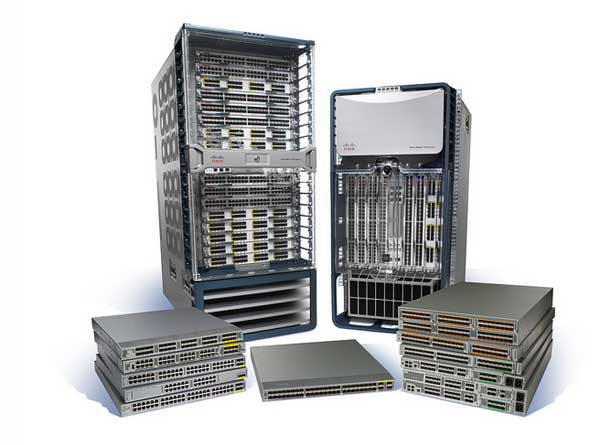
Early last month, Cisco announced a series of products for its Unified Computing System (UCS), the company’s server division. First on the list were UCS machines for cloud service providers and large companies that want to deploy a large number of applications or servers with extensive data storage for analytics. The list also includes a converged server, a storage and networking appliance for operating a remote computing system managed from a central location, and high-performance computers for data analysis and heavy workloads.
So, do you still think Cisco is the only company in the networking hardware business?
“We’ve always thought of ourselves as part of the IT market,” said Paul Perez, Vice President of UCS. “I like to think of UCS as the foundation upon which the rest of Cisco is built.”
Cisco products are increasingly being sold as part of UCS solutions—for example, when companies purchase high-end servers and install Cisco products, such as collaboration software, on them. In recent years, new customers who purchased UCS systems have added more than $1 billion worth of Cisco products to them, Perez said.
It sounds impressive—so much so that it needs to be reevaluated to bring it in line with reality.
Routers and switches—the core of the networking business—accounted for 46% of Cisco’s revenue in fiscal year 2014. UCS, which Cisco refers to as a data center in its financial statements, accounted for 6%.
Although one billion is a large number, it occurred over the course of several years. In fiscal year 2014 alone, Cisco's revenue totaled $47,000 million.
So, what's happening is that Mr. Perez and his managers are proud that UCS is growing at a rate of 30% per year. In addition, he believes that these servers are an ideal place to install other Cisco components.
It’s interesting that Cisco has chosen to integrate its products into UCS; after all, Cisco has a strong legacy in networking. Data storage is now a booming business—so much so that analysts call it “the place to keep customers.”
If war is going to be based on information technology, why not fight it?