Imagine super-fast Wi-Fi that's as easy as turning on a light. It's called LiFi, and it's more than 10 times faster than Wi-Fi. Now imagine all the possibilities.
“The ceiling light in your home will be the iPhone of the future,” says Professor Herald Haas, chief science officer at pureLiFi. Haas, a German physicist, first proposed the revolutionary idea of using LED lights as Wi-Fi transmitters four years ago during a TED Talk.
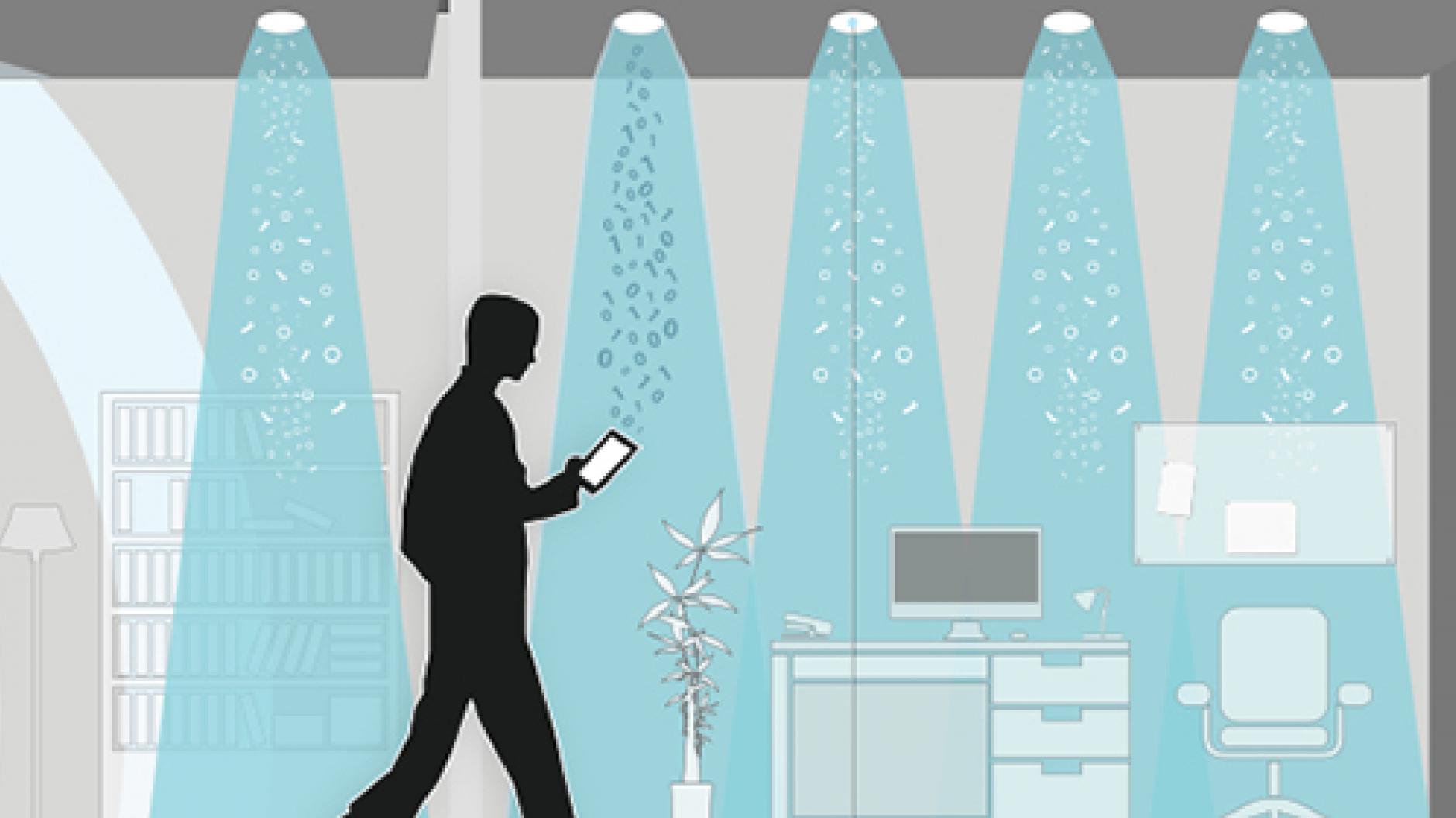
Instead of using the traditional radio frequencies that Wi-Fi relies on, this new type of connection uses a simple light source—an LED bulb equipped with a special chip and a light sensor—to establish an internet connection that can offer download speeds 10 times faster than the Wi-Fi we're familiar with.
Haas said he became aware of the current limitations of Wi-Fi thanks to his 10-year-old son, who was having trouble connecting to Minecraft because of the number of people trying to access the Wi-Fi signal at any given time. “When you go to an airport or a hotel and want to download a video, the download speed plummets, and it can take hours to load a home page because so many people are trying to connect, creating a bottleneck.” “They’re trying to connect to a limited resource: the radio spectrum. Think of a lake with as many people as you can imagine trying to get as much water as possible.”
“But with LiFi, that lake becomes an ocean capable of accommodating many more swimmers, since the bandwidth of the visible light spectrum is 1,000 times greater than that of the radio spectrum.”
If tests confirm this, these speeds could allow LiFi to download an HD movie in a matter of seconds, thanks to the bandwidth of the visible light spectrum and the low interference associated with light waves compared to radio frequencies. The system works by scanning a constant beam from an LED bulb, which is detected by the phone’s optical sensor and converted into an electrical current.
After launching two versions of its LiFi device, pureLiFi claims it is incredibly efficient, requires “negligible additional power,” and has no known security issues. Security is also enhanced by LiFi because the signal is limited to a specific area and cannot travel through walls.
PureLIFI is particularly useful for downloading video and audio and could enable interactive devices to communicate with each other and reduce the need for cables, with LED lights potentially powering these devices and supporting mobile phones.
Another company is pursuing a similar goal. Estonia-based Velmenni claims to transmit data at speeds of 1 Gbps via a LiFi light bulb, with lab tests promising speeds of up to 224 Gbps. (The fastest Wi-Fi speed achieved to date is 100 Gbps.)
While Velmenni aims to reach consumers within the next 3–4 years, pureLiFi expects to have its first products on the market by the end of 2016.
Hass said there is also a “fantastic” green aspect to the technology, as it can increase the energy efficiency of traditional Wi-Fi by 100 to 1,000 times (since there aren’t multiple devices constantly competing for the spectrum).
“The light spectrum can be reused many more times than the radio spectrum because it causes zero interference with people in the next room.” “Also, the fact that Wi-Fi passes through walls isn’t entirely safe. “With LiFi, you can rest easy.”
"Currently, the only real drawback to this potentially revolutionary technology is that it doesn't work outdoors, so there can be no public LiFi for now, nor can it be powered by sunlight, since that interferes with the signal."