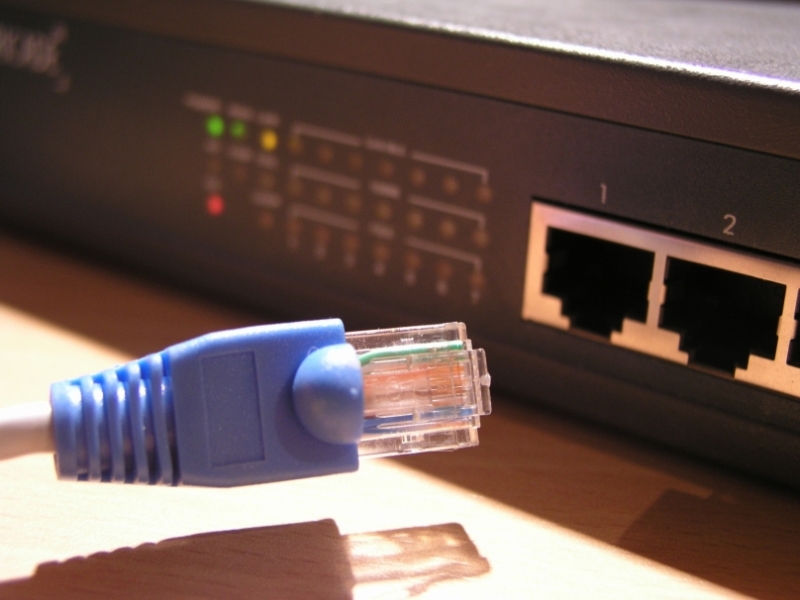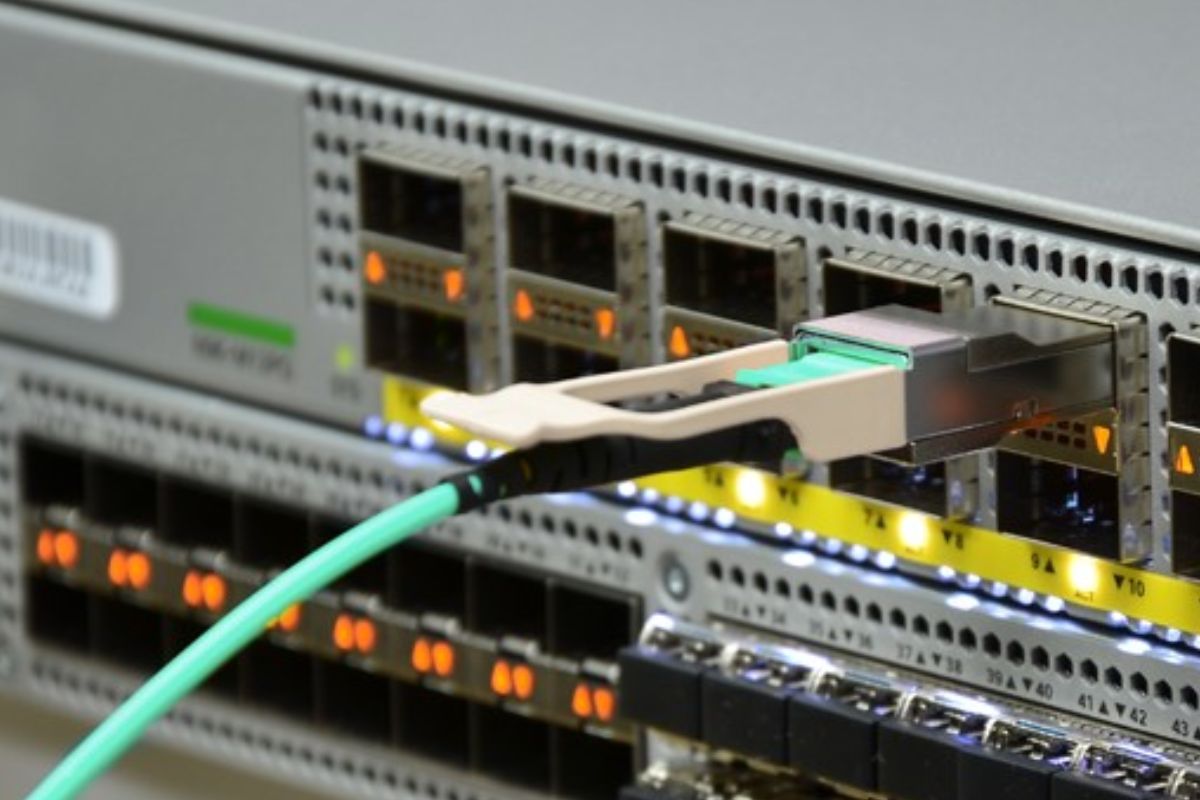
A 40G switch generally refers to the data rates of the ports that feed the switch. Therefore, 40Gb switches have 40 Gbps ports. The overall switching capacity of a 40 Gb switch will be much higher, depending on the total number of ports and the power of the switching fabric itself.
Data networking technology has evolved alongside technological advancements in electronics, chips, and cabling. 40 Gb switches are now growing rapidly and are becoming widely adopted in high-performance data center markets, filling the gap between 10 Gb and 100 Gb switches.
What should you consider when buying a 40 Gb switch?
Today, switches are labeled as 10 Gb, 40 Gb, or 100 Gb, which provides a common point of reference. Network switches typically use standard Ethernet technology. Ethernet emerged as the dominant networking standard in the mid-1990s, and since then, the progression in data rates has been predictable and reassuring for the industry, because entire product lines—including cables, port interfaces, and chips—can be built into supply chains based on the development cycle. This development cycle has generally followed the cadence of Moore’s Law, an engineering term referring to the computing power of chips roughly doubling every two years for the same economic price.
Since the mid-1990s, switching and Ethernet technology has progressed predictably, with the bandwidth of port interfaces increasing steadily. 10Base-T, or 10 Mbps Ethernet, was popular in the mid-1990s, followed by 100 Mbps Ethernet, 1 Gbps Ethernet, 10 Gbps Ethernet, and so on. The following table shows that the development of Ethernet speeds depends largely on computing power and total server capacity, since network bandwidth is needed to connect computing devices.
There are other technologies that operate at speeds of 40 Gbps, such as passive optical networks (PON) or storage technologies like Fibre Channel. These technologies may use protocols other than Ethernet, but they are often used for specific applications. Ethernet still accounts for the majority of 40G.
In 2015, 40G switches reached their peak in terms of demand and market growth. They were particularly well-suited for data center applications, which is the market’s fastest-growing segment. In addition, the market has shifted from 10G to 40G, and 40G now represents the fastest-growing segment.
At MercadoIT, we believe that 40Gb switches are designed for data centers, while 100G switches are ideal for telecom operators and other service providers. Next, we’ll discuss switches from different brands in the 40 to 100 GB range that we consider to be the best equipment for telecom operators:
Cisco Nexus 40-100 Gb Switches
N3K-C3064PQ-10GX – High-density 10G SFP+ ports and 4 40G uplink ports. Ideal for aggregating 10G circuits and transporting traffic over the 40G ports. They offer power supply redundancy and support MLAG.
N3K-C3232C – High port density at 100G. It offers flexibility, as the 100G ports can be converted to 40/25/10G ports. Ideal for aggregating all types of circuits and transporting traffic. It provides power supply redundancy and supports MLAG.
Juniper 40 Gb – 100 Gb Switches
QFX5100-48S – High-density 10G SFP+ ports and 6 40G uplink ports. Ideal for aggregating 10G circuits and transporting traffic over the 40G ports. They offer power supply redundancy and support MLAG.
QFX5120-32C-AFO – High port density at 100G. It offers flexibility, as the 100G ports can be converted to 40/25/10G ports. Ideal for aggregating all types of circuits and transporting traffic. It provides power supply redundancy and supports MLAG.
Arista 40 Gb – 100 Gb Switches
DCS-7050SX-64 – High-density 10G SFP+ ports and 4 40G uplink ports. Ideal for aggregating 10G circuits and transporting traffic over the 40G ports. They offer power supply redundancy and support MLAG.
DCS-7050CX3-32S-F – High port density at 100G. Offers flexibility, as the 100G ports can be converted to 40/25/10G ports. Ideal for aggregating all types of circuits and transporting traffic. It provides power supply redundancy and supports MLAG.