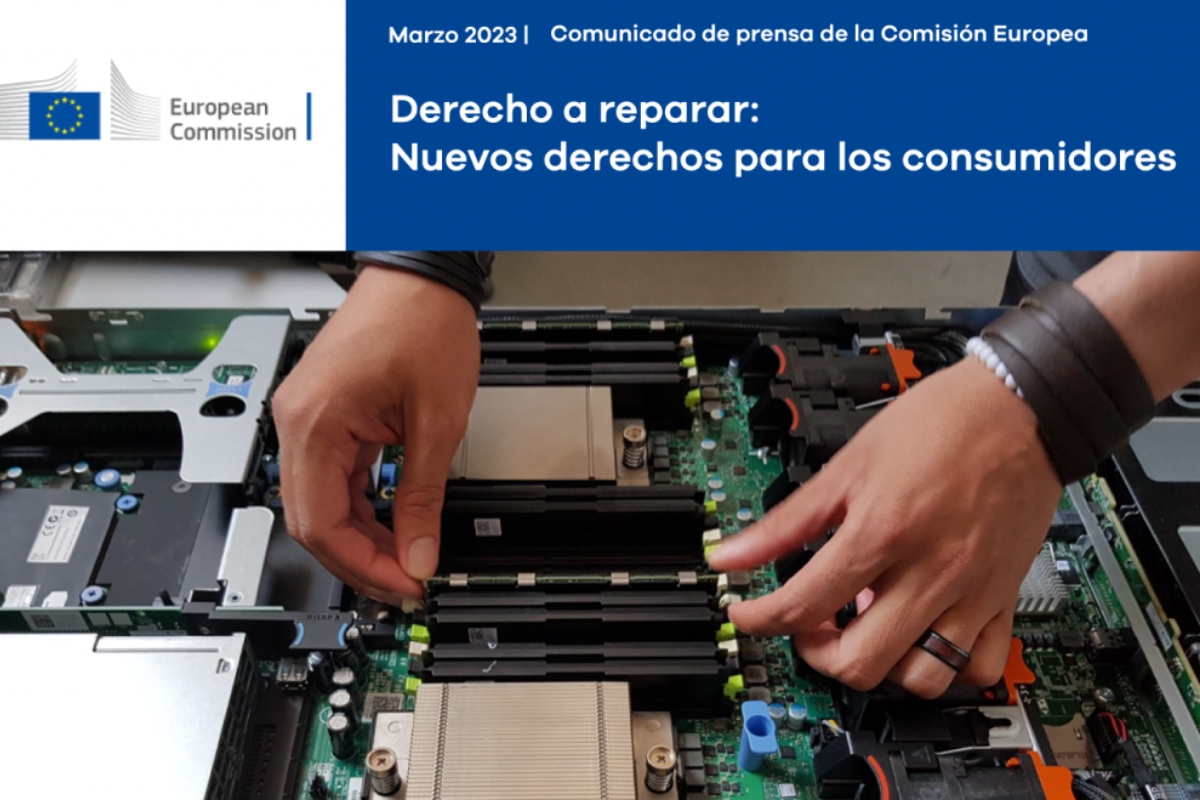
The European Commission today adopted a new proposal on common rules to promote the repair of goods, which will save consumers money and support the objectives of the European Green Deal by reducing waste, among other things. In recent decades, replacement has often been prioritized over repair when products are defective, and consumers have not been offered sufficient incentives to repair their goods once the statutory warranty expires. This proposal will make it easier and more cost-effective for consumers to repair products rather than replace them. In addition, increased demand will boost the repair sector, while encouraging manufacturers and retailers to develop more sustainable business models.
Today's proposal will ensure that more products are repaired within the statutory warranty period, and that consumers have easier and more affordable options for repairing products that are technically repairable (such as vacuum cleaners, or, in the near future, tablets and smartphones) when the statutory warranty has expired or when the product ceases to function due to wear and tear.
New measures to promote and facilitate repair and reuse
The proposal introduces a new “right to repair” for consumers, both under and outside the scope of the statutory warranty.
Under the legal warranty, sellers are required to offer repairs unless the cost of repair exceeds that of replacement.
Beyond the legal guarantee, consumers will have a new set of rights and tools to make "redress" an easy and accessible option:
Under EU law, consumers will have the right to request repairs from manufacturers of technically repairable products, such as washing machines or televisions. This will ensure that consumers always have someone to turn to when they choose to repair their products, while also encouraging manufacturers to develop more sustainable business models.
Producers' obligation to inform consumers about products that they are required to repair themselves.
An online repair platform that connects consumers with repair shops and sellers of refurbished products in their area. The platform will allow users to search by location and quality levels, which will help consumers find attractive deals and increase visibility for repair shops.
Consumers will be able to request a European repair information form from any repairer, which will provide transparency regarding the terms and price of repairs and make it easier to compare repair quotes.
A European quality standard for repair services will be developed to help consumers identify repair shops that are committed to providing higher quality service. This “easy repair” standard will be open to all repair shops in the EU that are willing to commit to meeting minimum quality standards, based, for example, on the lifespan or availability of products.
Next Steps
The Commission's proposal must be approved by the European Parliament and the Council.
Background
A recent Eurobarometer survey showed that 77% of Europeans feel a personal responsibility to take action to limit climate change. Discarded products are often still usable and repairable, but they are frequently thrown away prematurely, generating 35 million metric tons of waste, 30 million metric tons of resource loss, and 261 million metric tons of greenhouse gas emissions in the EU each year. Furthermore, it is estimated that consumers lose nearly 12 billion per year by choosing replacement over repair. In addition, the initiative is estimated to generate 4.8 billion euros in growth and investment in the EU.
However, consumers often find repairs difficult. The “right to repair” initiative complements several other proposals put forward by the Commission to promote sustainable consumption throughout a product’s entire life cycle, establishing the framework for a genuine “right to repair” across the EU.
This proposal is part of the European Commission’s broader goal of making Europe the first climate-neutral continent by 2050. This can only happen if consumers and businesses consume and produce in a more sustainable manner.
The “right to repair” proposal was announced in the New Consumer Agenda and the Circular Economy Action Plan. It addresses the barriers that discourage consumers from repairing their goods due to inconvenience, a lack of transparency, or limited access to repair services. Therefore, it promotes repair as a more sustainable consumption option that contributes to climate and environmental goals within the framework of the European Green Deal.
This initiative complements other instruments that pursue the European Green Deal’s goal of sustainable consumption through repair. On the supply side, the Regulation on the Ecodesign of Sustainable Products promotes the repairability of products during the production phase. On the demand side, the proposed Directive on Empowering Consumers for the Green Transition enables consumers to make informed purchasing decisions at the point of sale. This proposal strengthens the demand side by encouraging repair during the after-sales phase. Together, these three initiatives cover the entire life cycle of a product, complementing and reinforcing one another.
In addition, the initiative on the substantiation of environmental claims, also adopted today, will make it easier for consumers to support the green transition through their purchasing decisions and prevent companies from making misleading claims about the environmental merits of their products and services. This initiative also complements the proposal “Empowering Consumers for the Green Transition,” which establishes the horizontal framework against greenwashing.
This news article was originally published in https://ec.europa.eu/commission/presscorner/detail/en/ip_23_1794 March 22, 2023.