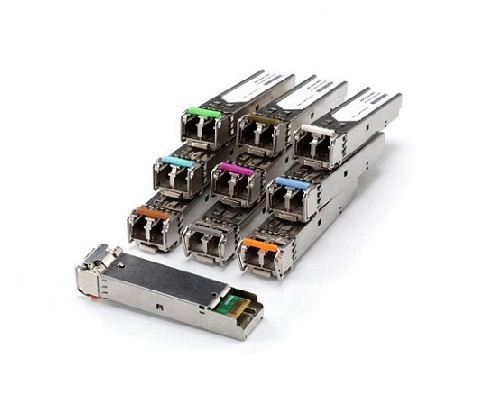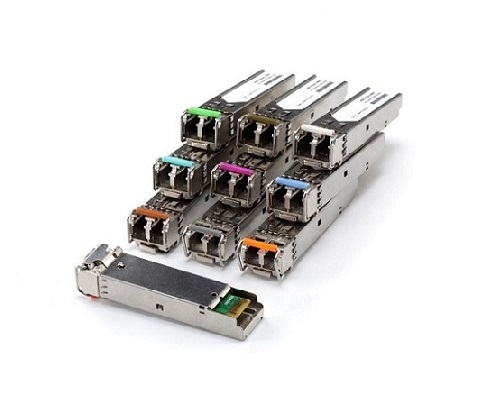
Single-mode SFP and multi-mode SFP are types of fiber-optic transceivers
SFP that will work with different types of optical fiber; for example, a single-mode SFP will work only with single-mode fiber, and multimode SFPs will work with multimode fiber.
So, what's the difference between them? And what should we keep in mind when using them?
When it comes to data transmission over optical networks, the fiber-optic transceiver is an essential component used to send and receive electrical and optical signals between devices such as input and output devices, peripheral devices, and switches.
According to different models of
fiber-optic transceivers, optical modules can be divided into single-mode fiber optic transceivers and multimode fiber optic transceivers.
Each type has its own distinct characteristics. It is important to understand their differences in order to choose the most appropriate type.
What are single-mode and multimode fiber-optic transceivers?
A single-mode fiber transceiver is a type of optical transceiver module—a standalone component that can receive and transmit data using single-mode optical fiber cables. It allows for signal transmission at extremely high bandwidths, thereby facilitating signal transmission over very long distances. A multimode fiber optic transceiver operates with multimode fiber. It allows for the use of low-cost LED light sources and connector alignment with coupling requirements that are less critical than those for single-mode fiber. The transmission distance of a multimode optical fiber transceiver is shorter than that of a single-mode transceiver due to dispersion.
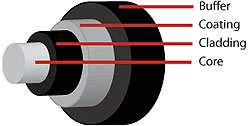
Single-mode fiber-optic transceiver
Single-mode fiber has much stricter tolerances for the optical components used. The core is smaller, and the laser's wavelength is narrower.
This means that
SMF It has the capacity to carry greater transmission bandwidth over much longer distances.
Single-mode SFPs primarily operate at wavelengths of 1310 nm and 1550 nm and are mainly used in long-distance transmission environments of 2 km, 10 km, 40 km, 60 km, 80 km, and 120 km
.
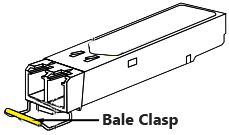
SFPs are identified by the color of the locking pin. Although there is still a lack of complete standardization, generally speaking, single-mode SFPs use the following color code:
- The bullet-gray color-coded bracket indicates a 1470 nm SFP
- A violet-coded bullet bracket denotes the 1490 nm SFP
- The blue color-coded clip designates the SFP 1510 nm
- The green-coded bullet bracket denotes the 1530 nm SFP
- A yellow-coded bullet bracket indicates a 1550 nm SFP
- The orange color code on the bullet bracket indicates the 1570 nm SFP
- A red-coded bullet bracket designates the 1590 nm laser SFP
- Brown-coded bullet latch designates the 1610 nm SFP
The compatible fiber-optic connection cable or pigtail is yellow.
Multimode Fiber Optic Transceiver
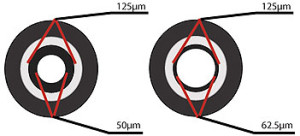
Multimode fiber uses a much larger core and typically operates at a longer wavelength of light.
Because of this, the optical components used in multimode systems have a greater capacity to collect laser light.
In practical terms, this means that the optical components are less expensive. Standard multimode SFPs operate at a wavelength of 850 nm and are used only for short-distance transmission, with ranges of up to 100 m and 500 m. Although they are not capable of long-distance transmission, they can carry many types of optical signals.
Just as with single-mode SFP modules, multi-mode SFP modules are identified by the color of the end cap:
- A black-coded SFP module indicates a Multi-SFP mode
- The compatible fiber-optic connection cable or pigtail is orange.
What are the differences?
The main differences between
fiber-optic transceivers Single-mode and multimode options are listed below.
In terms of transmission speeds and range, both single-mode and multimode fiber-optic transceivers can handle 10G speeds.
However, distance requirements are quite critical. Multimode optical transceivers generally have a range of about 550 meters, while single-mode transceivers can reach 10 km, 40 km, 80 km, and even farther.
The cost of the optical components used in single-mode fiber is twice that of those used in multimode fiber. But when installed as part of a project, the extra cost of single-mode fiber is negligible compared to multimode fiber.
The fragility and higher production cost of single-mode fiber make it more expensive to use.

When it comes to compatibility issues, the two types of transceivers are not compatible.
You cannot mix multimode and single-mode fiber between two endpoints.
Multimode fiber optic transceivers consume less power than single-mode fiber optic transceivers, which is an important consideration, especially when evaluating the cost of power and cooling for a data center.
Things to Keep in Mind: Tips and Recommendations
When using fiber-optic transceivers, the following is recommended.
- In single-mode transceivers, both ends of the fiber connection cable are of the same wavelength. The color of the modules used must be taken into account.
- To ensure and facilitate data accuracy, short-wavelength modules are used with multimode transceivers, while long-wavelength modules are used with single-mode transceivers.
- It is not recommended to coil the fiber-optic cable when using it. This is because doing so attenuates the light as it travels.
- If there are SFP/XFP modules in use on the host device, the empty port should be covered with a blank cover to protect the optical port.
From this article, we can learn what single-mode and multimode fiber-optic transceivers are and how they are used in different applications.
In summary, single-mode transceivers are typically used for high-speed data transmission over long distances. Multimode optical transceivers, on the other hand, are used for short-distance fiber-optic links.
Our website offers fiber optic transceivers with various data rates, such as 10G transceivers, and more.
All of them are tested on the appropriate equipment to ensure their performance and stability. If you have any questions, please contact us—we’d be happy to help.