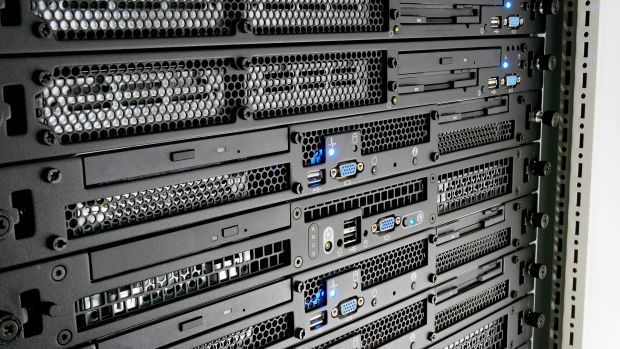
 1U rack servers
 are a solid investment for any small or medium-sized business, but what should you keep in mind when buying a server? Whether you’re looking for your first dedicated server or simply want to upgrade your existing low-power systems, a 1U rack server is what you need. Over the years, these systems have increased in capacity and are an excellent option for businesses that want to make the most of their office space.
In terms of both processing power and storage, the latest 1U rack servers offer some of the highest densities on the market. Furthermore, they are versatile enough to handle a wide range of functions.
1U rack servers are more flexible than tower servers in terms of space, as they are designed to fit into compact, vertical cabinets that make more efficient use of floor space. Cable, power, and server management can be centralized, and as demand increases, additional rack servers can be added to distribute the workload.
There is a wide range of manufacturers of this type of server on the market; we work with leading brands, such as
Dell EMC and
HPE. In
MercadoIT We offer a wide range of 1U rack servers, both new and refurbished. These servers are the ideal starting point for small and medium-sized businesses, as they offer good expansion potential, making them solid long-term investments.
Storage on a server
Server storage is used up faster than anything else, so always purchase more capacity than you currently need to avoid costly upgrades and downtime down the road. Physical space for storage devices in 1U rack-mounted servers is limited, so you must choose carefully between LFF (large form factor) and SFF (small form factor) drives.
LFF drives offer the best cost-per-capacity ratio and are already available in capacities up to 12 TB, but a 1U rack chassis only has room for four in its front panel. SFF drives can’t match them in terms of capacity, but most 1U rack-mounted servers support eight or ten, and some offer optional rear bays for two more.
Let’s assume you’ll be using
RAID protection; this is where SFF drives have the advantage, as their greater number offers more array options and flexibility. In addition, their reduced internal space requirements, lower power consumption, and lower heat output mean they don’t impact airflow as much as LFF drives, making the server easier to cool.
SATA drives are the least expensive, while for higher storage performance, consider Nearline SAS (NL-SAS) or SAS drives, although these are more expensive. In addition, most rack-mounted servers come with only one built-in SATA controller on their motherboard, so you may need to factor in the cost of an additional SAS card.
Monitor and protect server data
Your new rack server is your business-critical data center, so you need to know it’s in a secure state. The best 1U rack servers offer remote monitoring capabilities that use a dedicated management chip on the motherboard to access all hardware sensors.
They provide a dedicated network port and a built-in web server that lets you view the server’s vital signs using a standard web browser. The best ones can send alerts via email and SMS if any hardware sensor fails and also offer valuable remote control features.
Don’t rely solely on a RAID array to protect your data—you should back up all of it to an external destination. The good news is that there are many cloud, on-premises, and virtual backup solutions to choose from; we’ll soon be sharing a guide to backup software from
MercadoIT.